Is 3D/4D Ultrasound Safe? What FDA, ACOG and WHO Actually Say
Ultrasound, including 3D and 4D, uses sound waves rather than ionizing radiation, and evidence has not established harm to the baby when diagnostic scans are performed prudently by qualified professionals. That is not the same as proof of zero biological effect or a license for unlimited exposure. FDA discourages keepsake-only scanning, ACOG says casual prenatal ultrasound should be avoided, and WHO safety guidance discusses prudent diagnostic use.
Medical disclaimer: this article summarizes public guidance from health authorities for general information. It is not medical advice. Decisions about scanning during your pregnancy belong with your OB-GYN or midwife.
First, What 3D/4D Ultrasound Is
3D ultrasound assembles ultrasound data into a volumetric still image; 4D displays sequential volumes over time, so you see movement. Both use ultrasound energy, like routine 2D scanning; the difference is how the data is acquired, assembled and displayed, rather than a switch to ionizing radiation. For the full comparison of scan types (including what "5D" marketing means), see our 3D vs 4D ultrasound guide.
What the Major Organizations Actually Say
Positions summarized from the organizations' own public materials, linked in each row:
| Organization | Position (summary) | Source |
|---|---|---|
| FDA (US Food & Drug Administration) | Ultrasound has a strong safety record and is not ionizing radiation, but it can heat tissue slightly and produce small gas-pocket effects (cavitation), and long-term effects of that are not fully known. The FDA explicitly discourages ultrasound used solely for non-medical keepsake videos. | FDA: Ultrasound Imaging |
| ACOG (American College of Obstetricians and Gynecologists) | Ultrasound is considered safe when used appropriately, by trained providers, for medical indications; ACOG advises against non-medical use of ultrasound and recommends scans be performed only when clinically needed. | ACOG: Ultrasound Exams FAQ |
| WHO (World Health Organization) | WHO's diagnostic ultrasound manual describes diagnostic use as generally accepted as safe in the absence of plausible, confirmed human harm, while still discussing thermal and mechanical bioeffects and careful professional use. | WHO: Manual of Diagnostic Ultrasound |
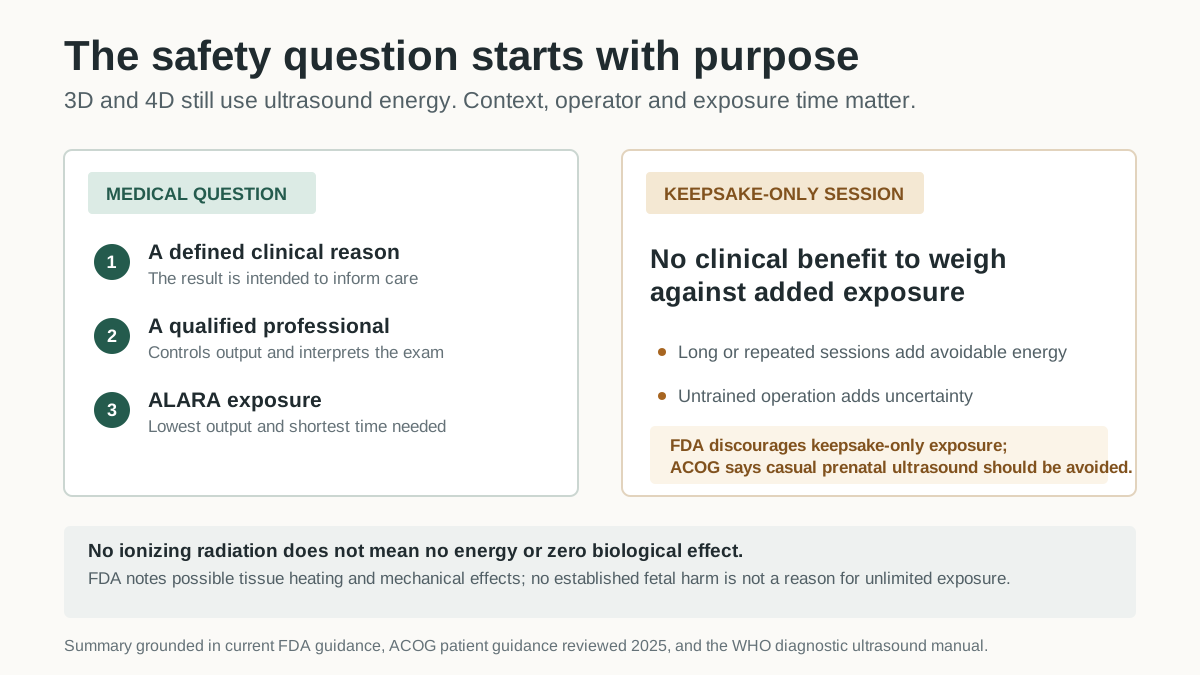
Taken together, the distinction is purpose, professional oversight and exposure discipline. The guide below turns those positions into a quick decision check; the sections after it explain ALARA, TI and MI.
ALARA: The Rule Professionals Scan By
ALARA stands for "As Low As Reasonably Achievable." It is the operating principle for all medical imaging, ultrasound included: use the lowest acoustic output and the shortest exposure time that still answers the clinical question. In practice this is why a trained sonographer does not linger on one spot for minutes, keeps output settings as low as the image allows, and ends the session when the needed views are captured. When you choose an elective 3D/4D provider, an operator who works this way is the single best safety signal you can observe.
TI and MI: The Two Numbers on the Screen
Modern ultrasound machines display two safety-relevant indices during the scan:
- TI (Thermal Index) is a model-based indicator of potential tissue heating, not a direct thermometer. A TI of 1.0 roughly corresponds to conditions associated with a possible 1 °C rise under the model's assumptions.
- MI (Mechanical Index) estimates the potential for mechanical (cavitation-type) effects from the pressure wave. For diagnostic imaging the FDA's regulatory ceiling is an MI of 1.9.
You do not need to monitor these numbers yourself; they exist so trained operators can. Their presence supports ALARA decision-making: exposure indicators, interpreted in context, by someone accountable for the exam.
Elective Keepsake vs Diagnostic Scans: Where the Real Difference Is
The safety conversation is about context rather than technology:
- Diagnostic ultrasound is ordered by your healthcare team, answers a medical question, and is performed under clinical protocols. This is the use case every safety record above describes.
- Elective keepsake ultrasound may use the same machines and physics, but it adds exposure without a clinical question or medical benefit. A trained operator and ALARA habits can reduce avoidable exposure; they do not turn a souvenir session into a medically indicated exam.
If you are considering an elective session despite that guidance, discuss it with your prenatal clinician first. Operator credentials, ALARA practice and a short effective scanning time reduce avoidable exposure, but the safest way to obtain a keepsake remains using images captured during a medically indicated exam without extending it.
Do More Scans Mean More Risk?
There is no confirmed harm from having multiple diagnostic ultrasounds at standard output levels, and many pregnancies medically require them. The professional consensus is narrower than "unlimited is fine," though: scan when there is a reason, don't accumulate exposure for its own sake. How many scans you need is a question for your OB-GYN rather than a studio's package menu.
The Zero-Exposure Way to Get the Baby-Face Moment
One thing to weigh before booking an extra elective session: if what you want is the face rather than another scan, that image may already exist in the ultrasound you have. You can turn an existing 4D scan into a real-life baby picture without another scan. Our AI works from a 3D/4D frame you already own, so the process adds zero acoustic exposure. You can also read what facial information a scan can and cannot show. No method, ours included, is 100% or medical.
FAQ
Are 3D ultrasounds safe for the baby?
Diagnostic ultrasound, including 3D, uses sound waves rather than ionizing radiation, and decades of use have not established harm when it is performed by trained providers following ALARA. No major body calls it dangerous; they do advise against medically unnecessary scanning.
Does 4D ultrasound harm the baby?
4D uses the same acoustic technology as standard prenatal ultrasound. Current guidance does not identify harm from prudently performed diagnostic scans. FDA discourages keepsake-only scanning, ACOG says casual use should be avoided, and WHO guidance emphasizes safe professional diagnostic use.
What does the FDA say about keepsake ultrasounds?
The FDA discourages ultrasound sessions done only for keepsake videos or images without medical supervision, while stating that adding keepsake images to a medically indicated scan is acceptable. Their concern is unsupervised, unnecessary exposure rather than the technology itself.
Is it safe to have multiple ultrasounds during pregnancy?
There is no confirmed harm from multiple diagnostic scans at standard output levels, but professional bodies recommend scanning only when there is a reason. Follow your OB-GYN's plan for how many scans you need.
Is 4D ultrasound radiation?
No. Ultrasound uses high-frequency sound waves. It involves no ionizing radiation, unlike X-ray or CT imaging.
Can AI make my existing scan clearer without another session?
Yes. AI works from the scan you already have and adds zero acoustic exposure. It produces a creative preview of your baby's face, not a medical image.
Sources
- FDA: Ultrasound Imaging
- ACOG: Ultrasound Exams FAQ
- WHO: Manual of Diagnostic Ultrasound
- Mayo Clinic: Fetal Ultrasound
Already Have a Scan?
See what it contains. Realistic portraits from the frame you already own, no new scanning involved.
This article is general information, not medical advice. For any question about scanning during your pregnancy, talk to your OB-GYN or midwife.