What Is 4D Ultrasound? Safety, How It Works, and What to Expect
If you are asking "what is a 4D ultrasound," the short answer is simple: it is real-time 3D ultrasound video.
Instead of a flat 2D image or a static 3D still, 4D lets you watch your baby move in the womb. Parents often describe it as the first time the pregnancy feels visually "real" because you can see expressions, mouth movement, and subtle motions.
At the same time, many families have safety concerns:
- Are 4D ultrasounds safe?
- Is 4D ultrasound safe for baby?
- Does 4D ultrasound harm baby?
Those questions are valid. This guide explains 4D ultrasound in plain language, including how it works, what experts say about safety, what you can realistically see, when to schedule it, and what to do if your image is not clear.
For type comparison, start with our full 3D vs 4D comparison. For timing, see the week-by-week best window.
What Is 4D Ultrasound? (Quick Answer)
4D ultrasound captures real-time 3D imaging of your baby. The "fourth dimension" is time, so you can watch movement rather than viewing one static frame.
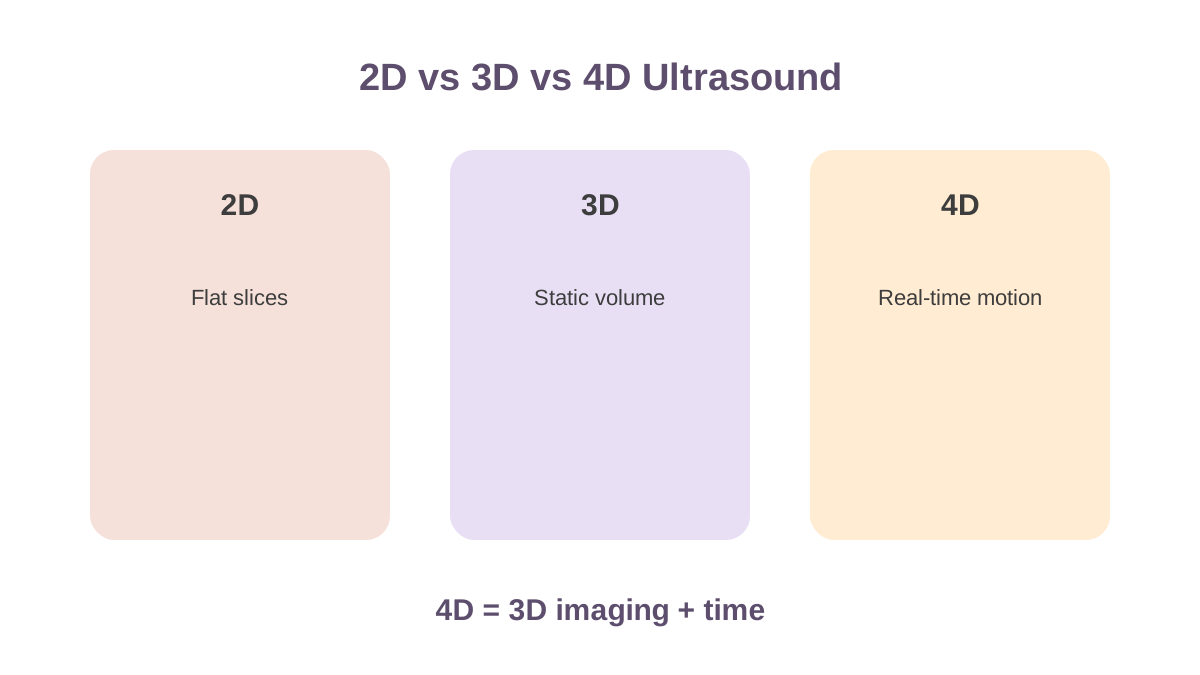
2D ultrasound shows flat slices. 3D ultrasound creates still volumetric pictures. 4D ultrasound adds live motion to that 3D volume. The underlying technology still uses sound waves, not ionizing radiation.
If you want a practical decision framework on which scan type is best for face detail, read our 3D vs 4D ultrasound guide.
How Does 4D Ultrasound Work?
4D ultrasound is not a different biological principle from standard prenatal ultrasound. It is a different way of processing and displaying scan data.
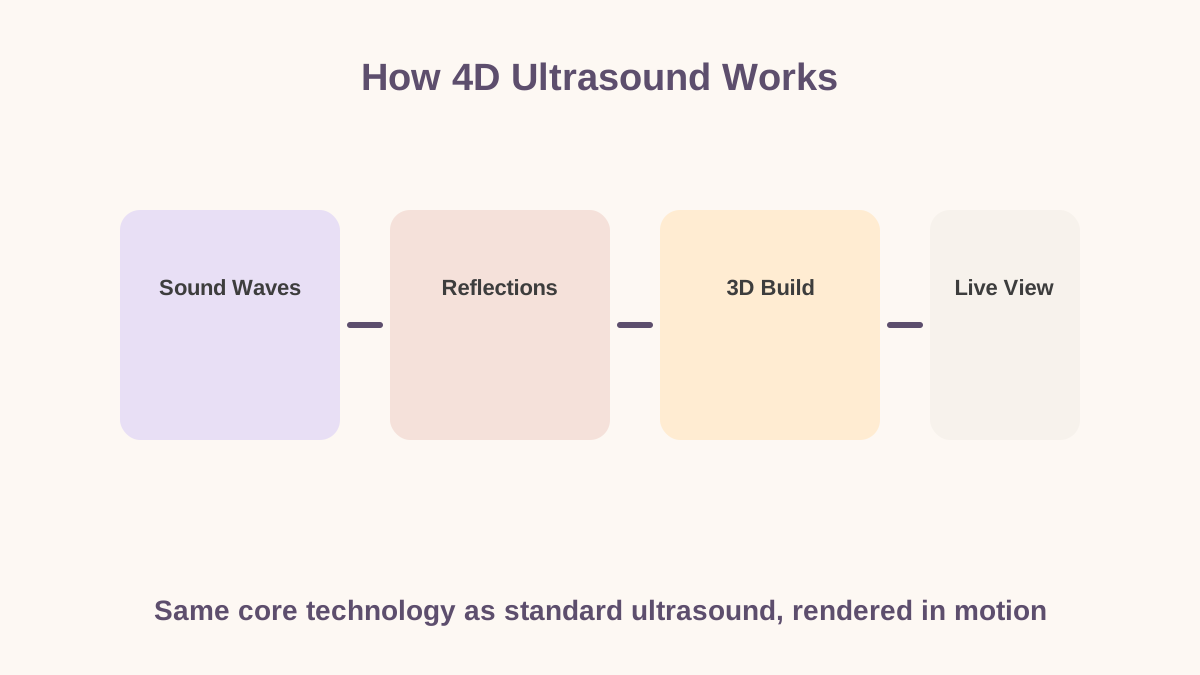
A simple flow looks like this:
- A transducer sends high-frequency sound waves into tissue.
- Reflected waves return to the probe.
- The system reconstructs 3D data from many slices.
- Fast rendering updates create real-time movement visualization.
Key technical concepts in plain language
- Transducer: the handheld probe placed on the abdomen.
- Frequency (MHz): affects penetration and detail tradeoff.
- Real-time rendering: software updates the 3D image rapidly enough to show movement.
- Soft tissue rendering: emphasizes contours of face and body surface.
What 4D is good at
- Capturing movement-based context
- Showing facial expressions and position changes
- Improving the chance of getting at least one clear face frame in session
What 4D is not
- Not a replacement for your clinical prenatal care plan
- Not a genetic result tool
- Not a guarantee of perfect face visibility in one appointment
Is 4D Ultrasound Safe? What Experts Say
This is the most searched concern, and it deserves clear, responsible language.
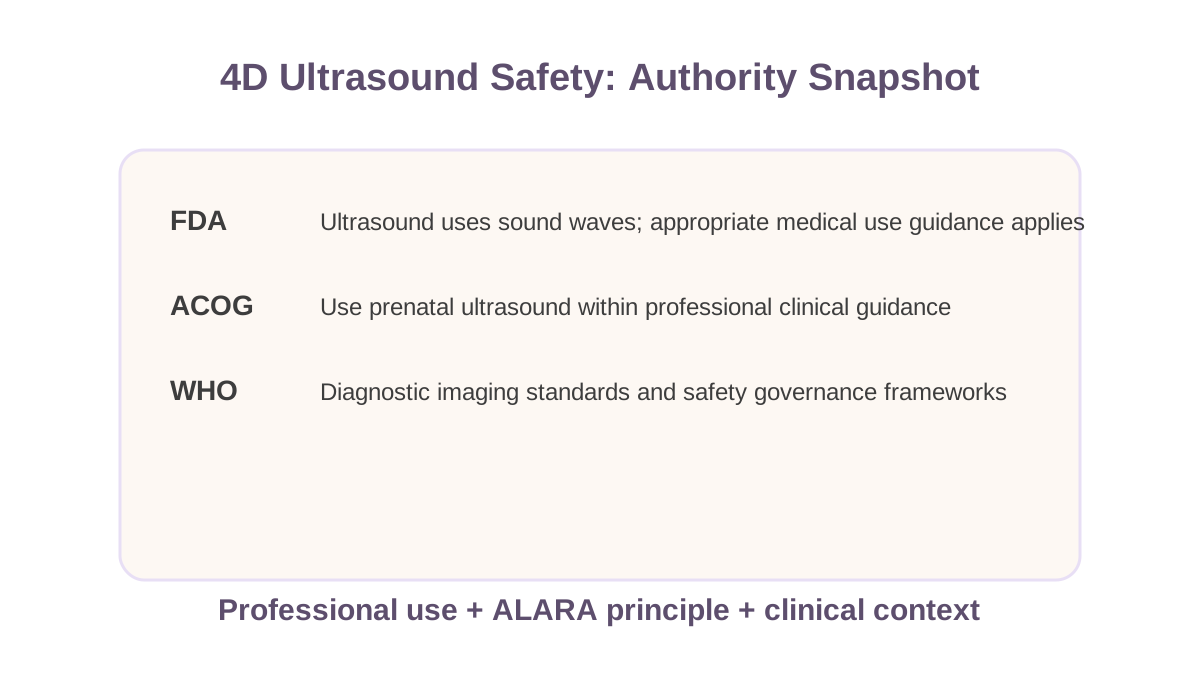
Short answer: when ultrasound is used appropriately by trained professionals under medical guidance, major organizations describe diagnostic ultrasound as generally safe. Ultrasound uses sound waves, not ionizing radiation.
Core safety principles to understand
#### 1. Sound waves, not radiation
Ultrasound imaging uses acoustic energy. It is different from X-ray or CT, which use ionizing radiation.
#### 2. ALARA principle
In medical imaging, ALARA means "As Low As Reasonably Achievable." In practice: use the minimum output and exposure time needed for useful information.
#### 3. Thermal Index and Mechanical Index
These are machine-displayed parameters that help operators monitor acoustic exposure conditions. You do not need to memorize values, but it is useful to know professionals use these controls.
#### 4. Keep sessions purposeful
Safety frameworks emphasize professional operation, appropriate duration, and avoiding unnecessary prolonged exposure.
Are 4D ultrasounds safe for baby?
In routine professional use, 4D is based on the same sound-wave technology as standard prenatal ultrasound. Safety context depends on how it is used, by whom, and for what purpose.
Does 4D ultrasound harm baby?
Current mainstream guidance does not frame standard, professionally administered diagnostic ultrasound as known to harm the fetus when used appropriately. For personal medical decisions, always defer to your OB-GYN and local care standards.
Elective keepsake vs diagnostic context
It helps to separate two use cases:
- Diagnostic ultrasound: medically indicated imaging directed by your healthcare team.
- Elective keepsake ultrasound: non-diagnostic, experience-oriented session.
Both use similar core technology, but medical necessity and supervision context differ. Keep your prenatal care pathway centered on your provider.
For official references, review the links in the reference section at the end of this guide.
What Will You See on a 4D Ultrasound?
A common expectation gap is assuming 4D shows everything exactly as newborn photos do. In reality, 4D can show many facial and movement cues clearly, but not all cosmetic details.
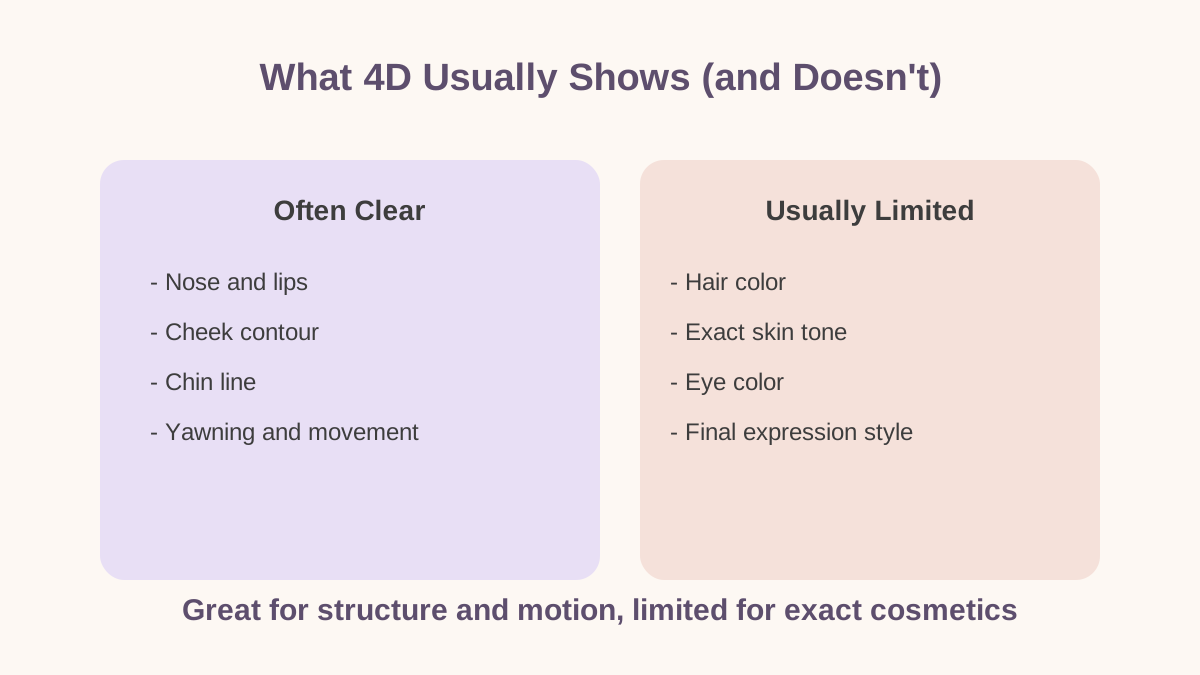
What 4D often shows well
- Nose and lip shape
- Cheek contour
- Chin line
- Mouth movement
- Yawning and swallowing motions
- Hand-to-face interactions
What 4D usually does not show precisely
- Hair color and full hair detail
- Exact skin tone under different lighting
- Eye color
- Final newborn expression style
Why some sessions look clearer than others
Image quality depends on:
- Gestational age
- Fetal position
- Placenta location
- Amniotic fluid conditions
- Sonographer technique
- Equipment generation
4D Ultrasound vs HD Live: Is There a Real Difference?
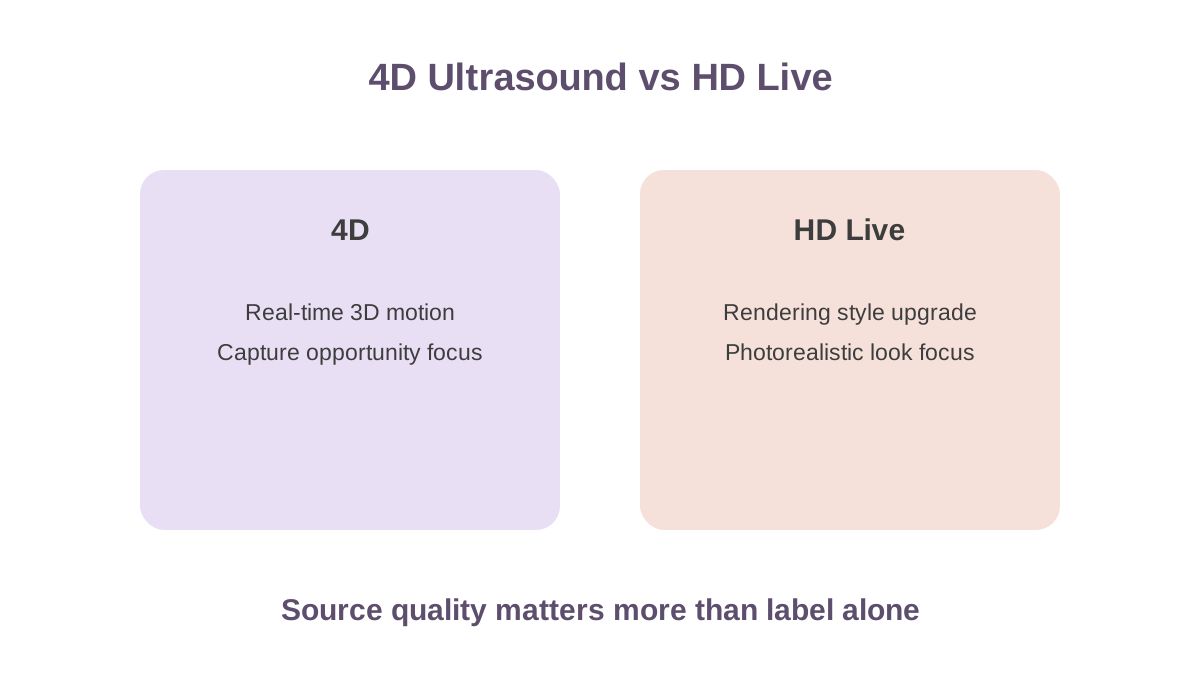
You may see terms like HD Live or "5D ultrasound" in studio marketing. These terms usually describe rendering style, lighting simulation, and image presentation quality layered on top of ultrasound data.
Practical difference for parents
- 4D gives live movement-based 3D visualization.
- HD Live style may look more photorealistic in still output.
- Quality still starts with source capture conditions, not label alone.
Is HD Live always worth extra cost?
Not always.
If timing and source capture are poor, premium styling cannot fully recover missing facial detail. If timing and capture are good, styled rendering can improve perceived realism.
When Should You Get a 4D Ultrasound?
For most face-focused sessions, the strongest practical window is 26-32 weeks, with many families targeting 28-32 weeks.
Why this range works:
- Better facial soft tissue definition than earlier stages
- Often enough movement room for useful angle changes
- Lower chance of severe space compression than very late stages
For a full schedule breakdown, read our best week-by-week timing guide.
Can you get 4D at 20 weeks?
You can, but detailed face results are less consistent compared with later in pregnancy.
Is 34 weeks too late?
Not necessarily. Some families still get strong captures at 34 weeks, but position dependence is higher.
Is 36+ weeks too late?
It can still be worth trying with realistic expectations. Partial views are more common.
What If Your 4D Ultrasound Is Not Clear?
Unclear scans are common and usually solvable with strategy.
Most common reasons for low clarity
- Face turned away
- Hand/cord obstructing face
- Position near placenta or uterine wall
- Timing outside high-probability window
What to do next
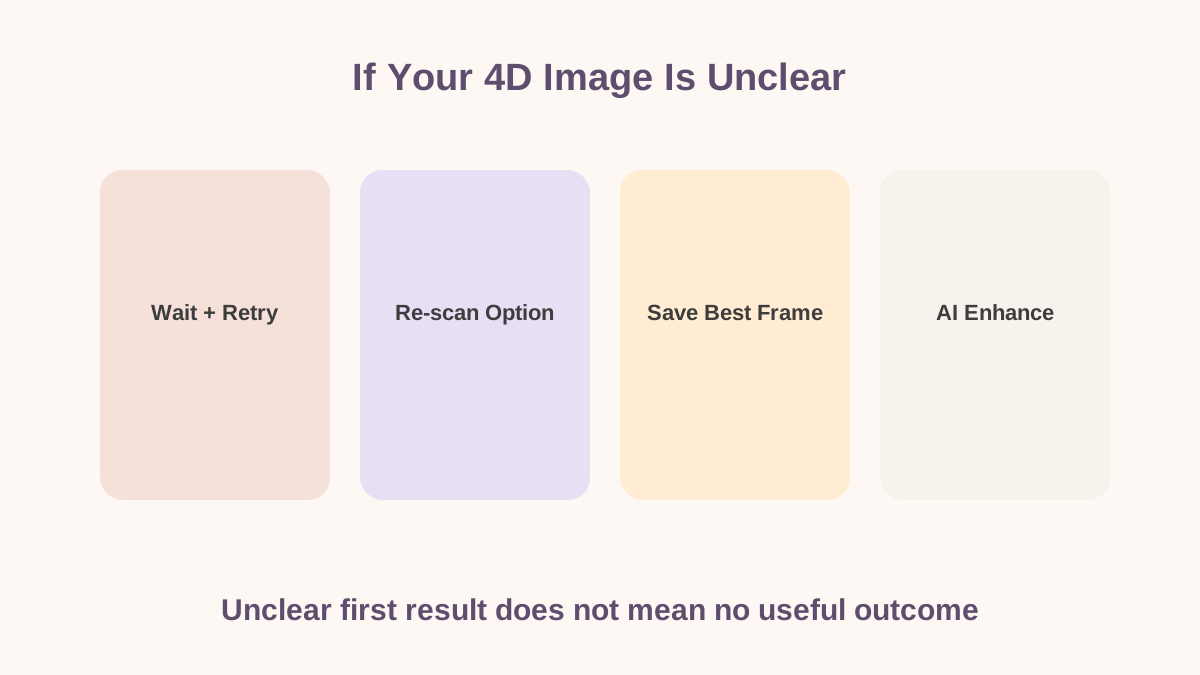
- Ask whether a short wait-and-retry may help.
- Ask provider if a re-scan option exists.
- Save best available frame even if imperfect.
- Use AI enhancement if enough facial landmarks are visible.
If you want to see practical resemblance outcomes from imperfect scans, review real ultrasound vs newborn examples.
Can AI help with low-quality 4D images?
Yes, in many cases. AI enhancement can improve readability and produce a photorealistic interpretation from visible features. It cannot create reliable biological certainty from fully missing anatomy.
4D Ultrasound for Bonding: Emotional Value vs Medical Value
Parents often feel uncertain because online advice mixes emotional and medical goals.
A useful framework is to evaluate your reason for booking:
- Medical goal: prioritize your OB-GYN and clinical imaging pathway.
- Bonding/keepsake goal: prioritize timing, provider quality, and realistic expectations.
These goals can coexist, but they are not identical. Clarity improves when you decide your primary intent in advance.
Why parents choose 4D even with extra cost
- Real-time movement creates stronger emotional connection
- Session feels more interactive for partners/family
- Often easier to capture expressive moments than static-only approaches
Why some parents choose 3D instead
- Lower cost
- Still enough structural detail for many families
- Good source for AI enhancement if frame quality is strong
If you are deciding between options, compare them directly in our 3D vs 4D pillar guide.
Expert-Informed Checklist Before Booking a 4D Session
Use this checklist to improve outcome probability:
- Confirm target timing (ideally 26-32 weeks).
- Ask about sonographer experience with face-focused sessions.
- Ask about effective scan time (not check-in time).
- Ask about re-scan policy for blocked face position.
- Keep expectations: preview quality, not newborn exactness.
- Preserve digital source files for later comparison or enhancement.
- Follow your prenatal care provider's advice for medical decisions.
A clear checklist reduces disappointment more than package upsells do.
What a Typical 4D Ultrasound Session Looks Like
Parents often ask what actually happens from check-in to final images. A realistic expectation reduces anxiety and helps you make better decisions during the appointment.
Step 1: Pre-scan setup
The sonographer confirms basic context such as gestational week and session goals (keepsake viewing, still captures, clips). This is a good time to ask how much effective scan time is included.
Step 2: Initial imaging pass
The operator starts with standard positioning and quickly assesses visibility conditions:
- fetal position,
- face orientation,
- shadow sources,
- fluid window.
If the face is visible early, this stage can already produce strong captures.
Step 3: Angle optimization
If visibility is limited, the operator adjusts probe angle and may pause briefly for natural fetal movement. In many sessions, this is the difference between a mediocre frame and a clear one.
Step 4: Capture and review
The team captures stills and/or short clips, then checks whether at least one image clearly shows key landmarks (nose, lips, cheeks, chin). Always ask to review representative frames before the session ends.
Step 5: Output selection and next step
You receive selected images or clips based on package terms. If clarity is limited, ask immediately about re-scan policy and whether your best frame is suitable for AI enhancement. Understanding this flow helps you evaluate session quality as a process, not as a single lucky screenshot.
Elective vs Diagnostic 4D Ultrasound: How to Decide Responsibly
Many parents are uncertain because they are trying to satisfy two goals at once: clinical reassurance and emotional bonding. Use this simple decision model:
- If your question is medical, start with your healthcare provider.
- If your goal is keepsake bonding, optimize timing and operator quality.
- If both goals exist, keep medical guidance first and keepsake expectations realistic.
When to involve your OB-GYN directly
- You have clinical concerns about fetal development.
- You are unsure about appropriate scan frequency.
- You need guidance specific to a medical condition or pregnancy risk profile.
When elective keepsake 4D is usually appropriate
- You understand it is non-diagnostic.
- Your primary goal is bonding and memory.
- You are booking in a practical timing range with a reputable provider.
A useful rule for expectations
Treat diagnostic imaging as healthcare and elective 4D as experience design. They can complement each other, but they are not interchangeable. That distinction protects both safety mindset and satisfaction outcomes.
FAQ
Is 4D ultrasound harmful to the baby?
Routine professional ultrasound uses sound waves, not ionizing radiation. Safety context depends on proper use and medical guidance. For personal care decisions, always follow your OB-GYN.
How long does a 4D ultrasound session take?
Session formats vary by provider. The useful variable is effective scan time and operator flexibility, not just package label.
Can you get a 4D ultrasound at 20 weeks?
Yes, but face detail is often less consistent than in the 26-32 week window.
What is the difference between 3D and 4D ultrasound?
3D is a static volumetric image. 4D is real-time 3D video over time.
Is 4D ultrasound the same as HD ultrasound?
Not exactly. HD Live usually refers to rendering style enhancements layered on top of ultrasound data.
Can AI enhance my 4D ultrasound image?
Yes. AI can improve visual clarity when enough facial landmarks are visible, but it is not a diagnostic tool and not an exact genetic result.
Is 4D ultrasound a medical result for my baby's final face?
No. It is an imaging-based preview and bonding experience, not a guarantee of exact newborn appearance.
Trusted References
- FDA: Ultrasound Imaging
- ACOG: Ultrasound Exams FAQ
- WHO: Diagnostic Imaging and Radiation Medicine
- Mayo Clinic: Fetal Ultrasound
- GE HealthCare Ultrasound Portfolio
Have a 4D Scan Already?
You can upload your current 3D or 4D ultrasound and generate a clearer baby-face preview.
Upload your ultrasound and get your preview
For entertainment and visualization only. Not medical advice or medical diagnosis.